What Is an Aluminum-Coated Bag?
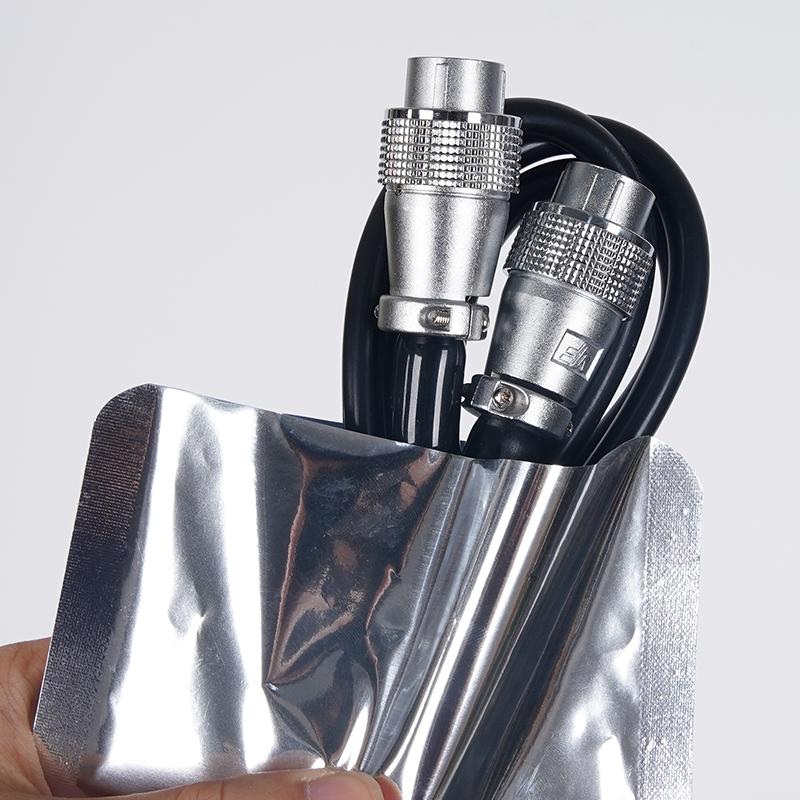
In the packaging of tea, coffee, nuts, and electronic components, you often see a bright silver bag. Many people simply call it an "aluminum foil bag." But it may actually be an aluminum-coated bag. The two look similar. But their performance and cost are quite different.
This article will help you understand aluminum-coated bags in a clear way. It covers what they are, how they are made, why they keep food fresh and block light, where they are used, and what to pay attention to when buying them.
Aluminum-Coated Bag: Aluminum Is "Coated," Not "Glued"
The key to an aluminum-coated bag is a very thin layer of aluminum on a plastic film. It is added by a vacuum aluminum coating process.
In simple words, in a high vacuum, high-purity aluminum is heated and turned into vapor. The aluminum vapor then forms a dense metal film on a base film such as PET, BOPP, or CPP. This aluminum coating is very thin. Its thickness is usually only about 0.03–0.05 μm. It is much thinner than pure aluminum foil.
Because the aluminum is coated and not glued, the bag keeps the flexibility and light weight of plastic film. At the same time, it gets the light-blocking and barrier properties of aluminum. So it is a packaging choice with both good performance and low cost, compared with pure aluminum foil bags.
Typical Structure: Three Layers with Different Jobs
An aluminum-coated bag usually has a multi-layer structure. The most common three-layer structure is:
PET / aluminum coating / PE
Each layer has a clear job:
- PET outer layer: It gives good printing performance and mechanical strength.
- Aluminum coating (VMPET): This is the key functional layer. It blocks light and acts as a barrier.
- PE inner layer: It is used for heat sealing. It makes the seal strong. It also touches the contents directly.
If you need better barrier performance and puncture resistance, you can use a four-layer structure. For example, PET / aluminum coating / NY / PE or PET / VMPET / PA / PE. The nylon (NY/PA) layer lowers oxygen transmission and improves puncture resistance.
Performance Advantages
The advantages of aluminum-coated bags are mainly barrier performance and cost performance.
1. Good barrier performance
The dense aluminum coating can effectively block light, oxygen, and water vapor. Here are typical product data:
- Water vapor transmission rate: ≤0.006 g/(m²·24h) (40°C, 90%RH)
- Oxygen transmission rate: ≤0.024 ml/(m²·24h·0.1MPa)
This barrier performance is much higher than that of normal PE bags or OPP bags. But note: it is still weaker than pure aluminum foil bags. It is a high-cost-performance compromise.
2. Light blocking and aroma keeping
The aluminum coating forms a mirror-like light-blocking effect. It can block UV light and visible light. This prevents the contents from light oxidation, fading, or spoiling. It also helps reduce the escape of flavors and volatile parts.
3. Good flexibility
Pure aluminum foil is easy to form pinholes after bending. But the coating of an aluminum-coated bag is attached to a flexible base film. So it does not leak easily after repeated bending. Its puncture resistance is also good.
4. Good appearance and support for color printing
The aluminum-coated side has a bright silver metal look. It looks better than normal clear plastic bags. It also supports color printing. This can improve product shelf appeal. A one-side aluminum-coated design is called a "Yin-Yang bag." It can block light and still show the product.
Where Are Aluminum-Coated Bags Mainly Used?
Aluminum-coated bags are used in many fields. They are mainly used in these scenes:
Food packaging: tea, coffee, nuts, puffed food, powder seasonings, dried meat, etc. With nitrogen filling, they can effectively slow down oxidation and extend shelf life.
Electronic components: The aluminum coating can form a shielding cavity. It is used for anti-static and anti-electromagnetic interference packaging of ICs, circuit boards, precision sensors, etc. It is often used with an anti-static inner bag. This forms "moisture-proof + anti-static" double protection.
Medicine and daily chemicals: medicinal materials, raw drugs, facial masks, skin care products, etc. These products have some requirements for light blocking and moisture proofing.
Industry and chemicals: chemical raw materials, precision mechanical parts, high-purity metals, etc. They are used for vacuum or general packaging. They provide moisture-proof and light-blocking protection.
An aluminum-coated bag is a composite flexible packaging material. It is light, blocks light, has good barrier performance, and has a moderate cost. It is not as "extremely barrier" as a pure aluminum foil bag. But in many scenes, such as tea, coffee, powder food, and electronic components, it is good enough. It also has better cost performance.
If you are looking for a suitable aluminum-coated bag supplier, you can contact us at Anhui Zhuangbei Technology Co., Ltd. We will serve you with all our heart. We will provide suitable products and quotations.